
Sirubari Village Homestay – 8 Days
Duration
Tour Type
Explore Tours
Country
Nepal
Duration
8 Days
Trip Grade
Easy
Altitude
1700m
Group Size
Min 2 Pax
Trek Style
Homesstay
Transportation
Domestic Air/Land Transportation
Airport
Domestic
- Taste fresh homemade food with seasonal organic vegetables
- Imminent into the cultural traditions of the local Gurung village
- Panoramic views of Nepal Himalayas
Sirubari Village Homestay Itinerary
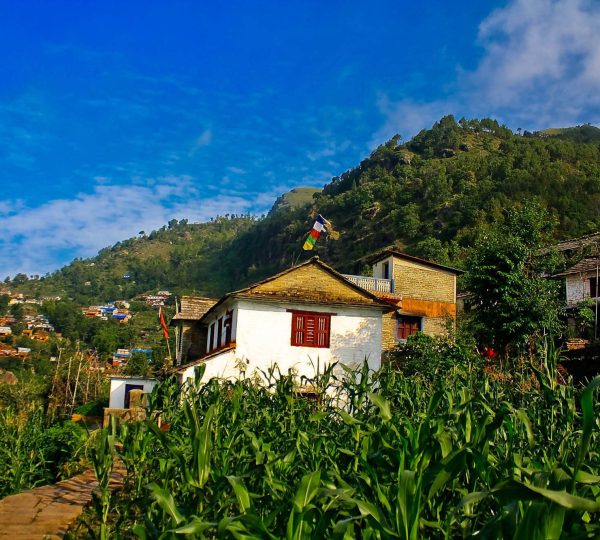
Sirubari Village Homestay, is a picturesque Gurung village nestled in the hills of Syangja district, about 1700 meters above sea level. It is accessible from Pokhara, a popular tourist destination in Nepal, making it relatively convenient for travelers, taking 4 hours drive by jeep and 6-7 hours by local bus.
Sirubari Village Homestay exemplifies the beauty of community-based tourism, where visitors can contribute positively to local livelihoods while experiencing genuine hospitality and cultural exchange in a stunning Himalayan setting. Many visitors to Sirubari Village Homestay describe it as a transformative experience, offering insights into a different way of life and fostering deep connections with the local community. It’s an opportunity to disconnect from the hustle and bustle of modern life and immerse oneself in the tranquility of rural Nepal.
Sirubari is known for its natural beauty, surrounded by lush green hills and terraced fields. The village offers serene walks and hikes through forests and along trails that provide stunning views of the Himalayan ranges, including Annapurna and Dhaulagiri. The best time to visit Sirubari is during the spring (March to May) and autumn (September to November) seasons when the weather is pleasant, skies are clear, and the views of the mountains are usually spectacular. Visitors have the opportunity to purchase locally made handicrafts and souvenirs, which supports the livelihoods of villagers and promotes traditional arts and crafts.
A short drive from Pokhara welcomes you with a warm hospitality and makes you feel comfortable staying in their home as if you are one of their family members. A short an hour of an excursion to Thumro rewards you with the breathtaking view of the Annapurna and Dhaulagiri range. The climate is ideal throughout the year with no snowfall.
Tour Plan
Upon your arrival in Kathmandu, Great Nepal Representative will pick you up from the airport. You will then be transferred to Hotel. The tour leader attends a formal briefing about your package. Take rest at our hotel room.
Kathmandu Durbar Square: This complex of palaces, courtyards and temples like Hanuman Dhoka Palace, Kumari Ghar (Abode of the Living Goddess), and Taleju temple, built between the 12th and 18th centuries, used to be the seat of the ancient Malla Kings of Kathmandu. An intriguing piece here is the 17th-century stone inscription set into the wall of the palace with writings in 15 languages. The Durbar Square, protected as a UNESCO World Heritage Site, is the social, religious and urban focal point of the city. Swoyambhu Nath Stupa (Monkey Temple): The Great Stupa of Swayambhu stands on a hill to the west of Kathmandu. The myth of its origin is also the myth of the primordial Buddha enlightenment; it is the story of the origin and spread of Buddhism in Nepal and the origin myth of the Valley. This most sacred power place has always been the most important power place for Valley Buddhists and pilgrims of all Buddhist persuasions from all over the world. It is considered to be the most powerful shrine in the Himalayas. At the top of the eastern stairway is the great Vajra set upon a drum that has the Dharmadhatu Mandala inscribed upon its gilt copper top. It is said that this drum covered a well that reflected images of the beloved dead with such flattery that wives and husbands would throw themselves in and drown. Another story has it that the Mandala covers a pit to the hells and the realms of the hungry ghosts. Patan City (City of Fine Arts): Patan City is full of Buddhist monuments and Hindu temples with fine bronze gateways, Guardian Deities and wonderful carvings. Krishna Mandir, which is one of the grandeur of the square, was built in 1637 by the king Siddhi Narsingh Malla. The entire temple is constructed from stone. Noted for its craftsmen and metal workers, it is known as the city of fine arts or the city of artists. The diversity of the medieval culture that allowed both Hinduism and Buddhism to flourish has left a rich legacy of impressive sightseeing in this city for today’s visitors. Krishna Mandir, Bhimsen Temple, and Hiranya Varna Maha Bihar are just a few of the temples offering you an ecstasy of paintings, wood and metal carvings
After breakfast, drive to Pokhara (200km/5-6 Hrs Drive). Upon Arrive at Pokhara, you move to the hotel for the check in process. After a short tour briefing you will have some leisure time on your own. Evening enjoy around Lakeside.
Early morning after breakfast a short drive to Arjunchaupati and start our short hike to Sirubari village. Upon arrival at Sirubari village get refreshment and ready for culture programs with blessing ceremony from village Lama (preist) in the evening. Dinner and overnight at Local home stay.
Early morning hike to Dhare hill for beautiful sunrise. Enjoy the moments, take a photo and return to home stay. After breakfast a short hike to Arjunchaupati and back to Pokhara, lunch en-route.
Early in the morning hike to Sarankot for a beautiful sunrise. Enjoy the moments with sunrise on Himalayan vistas. Return to Hotel for breakfast. Later visit David Falls, Gupteshwor Mahadev Cave, Bindabasini Temple, Seti River George and Tibetan Refugee Camp. Evening free on own, one can enjoy boating at Fewa Lake to visit Tal Barahi.
We return Kathmandu by tourist bus, upon arrival in Kathmandu you will be escorted to your hotel. You are free to enjoy leisure day or catch up on some last minute shopping or explore any landmarks we missed during our first day in Kathmandu. In the evening, we can visit some more places in Kathmandu as far as possible then we will attend a celebration dinner together.
Sadly your most memorable journey ends today. Our staff of Great Nepal treks will see you off at Tribhuvan International Airport for your flight to your onward destinations.
Included
- Airport transfer in a private vehicle with escorts.
- All surface transfers as per the itinerary (Tourist Bus/ Private vehicle)
- 3 Nights accommodation in Kathmandu using 3* Hotel on twin sharing basis -BB (depending on the category chosen).
- 3 Nights accommodation in Pokhara using 3* Hotel on twin sharing basis -BB (depending on the category chosen).
- 1 Night accommodation in Local Home Stay on Full board basis (B/L/D)
- An English speaking Guide and private vehicle for sightseeing tour in Kathmandu and Pokhara as per the Itinerary.
- Food, accommodation, salary, insurance, equipment, medicine, and transportation for the tour guide.
- Complimentary dinner with Nepali cultural show on final evening in Kathmandu.
- All Service charge & Government Taxes (Currently 13% VAT)
Excluded
- Monument Entrance Fee
- Snacks, soft drinks, alcoholic drinks, water and personal items
- Lunch and dinner whilst in Kathmandu & Pokhara
- Nepal entry visa fee (US$ 30 per person) you can obtain a visa easily upon your arrival at Tribhuvan International Airport Kathmandu for either 30 days or 90 days from the date of issue. You will need to have the currency either USD AUD or EU in cash to pay for your visa.
- Airfare and Airport Taxes (If any)
- All expenses except listed above in cost includes section
Location
Find a route from your location
Frequently Asked Question (FAQ)
What is Acclimatization? Is it important to acclimitized?
To enable all trekking & expedition members to acclimatize well and hence maximize their chances of success, our trekking & expedition programs are prepared with sufficient time for acclimatization. Adaptation to the altitude takes time and there can be no short-cuts, even if supplementary oxygen is used in the final stages. The atmospheric pressure at the base camp is half of that at the sea level. A thorough program of acclimatization is built into the itinerary which consists of regulated height ascents, followed by descents and rests before the final ascent to the summit. Yes it is very important for all trekkers and climbers because this will prevent the climbers to get rid from altitude sickness.
What kind of personal first aid should i carry while trekking or Expedition in Nepal?
Although our guides from Great Nepal Treks carry first aid medical kit, it is better to carry a supply of first aid items for your own personal use according to your health conditions. Here are the list of some general as well as some special medications you may require:
– Antiseptic cream (Betadine)
– Sunblock SPF 30+
– Throat lozenges
– Painkillers and anti-inflammatory such as Aspirin, Paracetamol, Ibuprofen etc.
– Band-aids, bandage, compression bandage and ‘Second Skin’ for blisters
– Re-hydration salts. (Trioral, Electrobin, Oral Rehydrating Salt)
– Dextrose glucose tablets
– Water treatment tablets
– Your prescription medications
– Antibiotics for longer climbing and expedition style trips
Does high altitude effect and benefits?
You will be affected by high altitude problems if it is your fist trip at a high altitude. The altitude has some important beneficial effects on the human body and your trips have been designed to enable these. Please familiarize yourself with the information on AMS (Acute Mountain Sickness) and understand how to avoid it and read on benefits of high altitude and take advantage of these to improve your body’s metabolism.
What is Acute Mountain Sickness(AMS)
Altitude sickness is the reaction of the body adjusting to decreasing amounts of oxygen. The high altitude slowly decreases the flow of oxygen means the higher you climb, the flow of oxygen is very thin resulting the malfunction of body. Altitude sickness most commonly occurs from above 2,800 meters (9,200ft) but this is different for everyone – there is simply no way of knowing your own susceptibility prior to being at altitude thus it is vital for you to monitor your own health. AMS occurs when the body is unable to adopt at the higher altitude having less amount of oxygen. At an altitude of 5490m (18000 ft.), the oxygen availability becomes just the half of the availability at sea level. While only a third of oxygen is available at the summit of Mt. Everest. Symptoms may be mild and subside/go away after a day’s rest, or if it is ignored it could lead to death.
What are the symptoms of AMS?
Symptoms can appear within 1-2 hours although most often appear 6-10 hours after ascent and generally subside in 1-2 days as the body adjusts to altitude. They may reappear as you continue to go higher. Symptoms of AMS usually occur gradually and can be one or a combination of the following:
• Headache: Due to the less amount of oxygen in air, the blood influences the blood vessels to spread wide in order to supply more oxygen to the brain and which cause them to show the early symptom of AMS.
• Dopiness: The trekkers or climbers feel very sleepy but could not.
• Shortness of breath: The breathing pattern changes as the breathing becomes faster and deeper than normal in order to get enough oxygen and rapid pulse
• Loss of appetite and nausea: Despite of physical exercise, the trekkers don’t have an appetite to eat.
What are the Life threatening forms of AMS?
High Altitude Pulmonary Edema (HAPE)
If one accumulates of fluid in the lungs and mild fever then, there is a chance of High Altitude Pulmonary Edema (HAPE). The filling of fluid in the lungs is Pulmonary Edema. The fluid blocks the passage of fresh oxygen to get into the lungs which causes the shortage of oxygen. Though the exact reason for the HAPE has not been identified, scientists think that pressure of blood vessel around the lungs is directly proportional to the altitude. As a result the smaller blood vessels leak allowing the fluid to escape to the lungs. The treatment for the HAPE victims is to give the oxygen at the rate of 4 liters a minute, using Portable Altitude Chamber (PAC). In case of unavailability of PAC bag or oxygen, one is taken down to the low altitude which is the only way of life-saving. HAPE can also lead to unconsciousness which may also results to death in a short period of time.
High Altitude Cerebral Edema (HACE)
HACE is the accumulation of fluid in the brain due of the swollen blood vessels to the brain. HACE is also seen within a couple of hours and can send the patient to coma and take his/her life in just few hours likewise to HAPE. The excessive flow of blood to the brain due to the low-level oxygen causes vasodilation which eventually leads to leakage of blood vessels to the brain. A 4 to 8mg of dexamethasone is given as a first dose to those who suffer from such sickness and then 4mg Diamox is given an every six hours gap. Similarly, 2-4 liters/minute oxygen is given and one is taken to down if it is necessary.
What are the Symptoms of HAPE?
Breathlessness
– A dry cough, developing to a wet one with blood-tinged discharge or saliva
– Tightness in the chest & blueness/darkness of face, lips & tongue
– Low fever up to 38°C/100°F
– Severe fatigue, progressing to coma
What are the Symptoms of HACE?
– Severe headache symptoms not relieved by painkillers or lying down
– Confusion, disorientation & drowsiness
– Nausea/vomiting
– Loss of balance or coordination
– Blurred or double vision/retinal hemorrhage
How to Prevent Altitude Sickness?
Certain medical conditions (such as respiratory disease) or medications (such as sleeping pills) can increase the risk of altitude sickness – it is important that you inform your guide of any medical conditions or medications before ascending to altitude. You can help your body to acclimatize and avoid altitude sickness by:
– Avoiding alcohol, tobacco and substances that can interfere with good delivery of oxygen to the body or cause dehydration
– Eating small, frequent meals high in carbohydrates
– Drinking plenty of water – the test of sufficient amount of water intake is ability to urinate colorless urine
– Taking it easy or have a rest. Walk at a slower pace than you would at sea level and avoid over-exertion
– Climb the mountain gradually and stop for a day or two of rest for every 600m/2000ft above 2,400m/8000ft
– Climb high but Sleep at a lower altitude if possible
– Learn how to recognize early symptoms of mountain sickness
Since our Guides from Great Nepal Treks are very professional and well trained about altitude sickness, they will guide you during your trekking and expedition activities in Nepal.
How GNTE handle you during the case of emergency?
You never know when the unexpected situation comes and put you in hearse condition whether you are professional or beginners. Our professional guides do their best to make you well with first aid support. If the situation goes worse, you will be evacuated by Helicopter. You are entirely liable for all the expenses incurred in evacuation. So, before coming to Nepal, please make your travel insurance. Ask your guide to arrange a runner to the nearest communication point and inform office about requirement of a helicopter. For evacuation, we require the name of the sick person and the exact location from where helicopter can airlift you. You should not leave the place after calling Helicopter for evacuation though you are feeling better than before.
How to get safe drinking water during trekking and Expedition in Nepal?
On the trek, there is a facility of purchasing safe drinking water in teahouses.It is better if you carry the water purifying pills on your own. On camping trek, the water will be treated with Potassium permanganate or Iodine. On the trail, water from the streams is safe to drink, but better not to use it directly for drinking.
Are we safe with Great Nepal Treks during our trekking or expedition journey?
Security and a safe journey is our core objective of trekking. Our guide holds licenses issued by the Nepal Government and our staffs are local, honest, kind and genuine. But we also insist you to take care of your own personal belongings. If you are on ‘camping trek’ please take your main bag inside the tent once you reach campsite and put all bags and belongings in the middle of the tent when you feel sleepy. Your guide assigns a Sherpa on turn wise basis to guard the campsite throughout the night. If you are on ‘Tea house arrangement, never leave your baggage unattended and keep your lodge room locked when you go out. Feel safe since you are in the hands of ethical trekking company in Nepal.
What kind of personal first aid should i carry while trekking or Expedition in Nepal?
Although our guides from Great Nepal Treks carry first aid medical kit, it is better to carry a supply of first aid items for your own personal use according to your health conditions. Here are the list of some general as well as some special medications you may require:
– Antiseptic cream (Betadine)
– Sunblock SPF 30+
– Throat lozenges
– Painkillers and anti-inflammatory such as Aspirin, Paracetamol, Ibuprofen etc.
– Band-aids, bandage, compression bandage and ‘Second Skin’ for blisters
– Re-hydration salts. (Trioral, Electrobin, Oral Rehydrating Salt)
– Dextrose glucose tablets
– Water treatment tablets
– Your prescription medications
– Antibiotics for longer climbing and expedition style trips
How to Prevent Altitude Sickness?
Certain medical conditions (such as respiratory disease) or medications (such as sleeping pills) can increase the risk of altitude sickness – it is important that you inform your guide of any medical conditions or medications before ascending to altitude. You can help your body to acclimatize and avoid altitude sickness by:
– Avoiding alcohol, tobacco and substances that can interfere with good delivery of oxygen to the body or cause dehydration
– Eating small, frequent meals high in carbohydrates
– Drinking plenty of water – the test of sufficient amount of water intake is ability to urinate colorless urine
– Taking it easy or have a rest. Walk at a slower pace than you would at sea level and avoid over-exertion
– Climb the mountain gradually and stop for a day or two of rest for every 600m/2000ft above 2,400m/8000ft
– Climb high but Sleep at a lower altitude if possible
– Learn how to recognize early symptoms of mountain sickness
Since our Guides from Great Nepal Treks are very professional and well trained about altitude sickness, they will guide you during your trekking and expedition activities in Nepal.
Are we safe with Great Nepal Treks during our trekking or expedition journey?
Security and a safe journey is our core objective of trekking. Our guide holds licenses issued by the Nepal Government and our staffs are local, honest, kind and genuine. But we also insist you to take care of your own personal belongings. If you are on ‘camping trek’ please take your main bag inside the tent once you reach campsite and put all bags and belongings in the middle of the tent when you feel sleepy. Your guide assigns a Sherpa on turn wise basis to guard the campsite throughout the night. If you are on ‘Tea house arrangement, never leave your baggage unattended and keep your lodge room locked when you go out. Feel safe since you are in the hands of ethical trekking company in Nepal.
How to get safe drinking water during trekking and Expedition in Nepal?
On the trek, there is a facility of purchasing safe drinking water in teahouses.It is better if you carry the water purifying pills on your own. On camping trek, the water will be treated with Potassium permanganate or Iodine. On the trail, water from the streams is safe to drink, but better not to use it directly for drinking.
What kind of personal first aid should i carry while trekking or Expedition in Nepal?
Although our guides from Great Nepal Treks carry first aid medical kit, it is better to carry a supply of first aid items for your own personal use according to your health conditions. Here are the list of some general as well as some special medications you may require:
– Antiseptic cream (Betadine)
– Sunblock SPF 30+
– Throat lozenges
– Painkillers and anti-inflammatory such as Aspirin, Paracetamol, Ibuprofen etc.
– Band-aids, bandage, compression bandage and ‘Second Skin’ for blisters
– Re-hydration salts. (Trioral, Electrobin, Oral Rehydrating Salt)
– Dextrose glucose tablets
– Water treatment tablets
– Your prescription medications
– Antibiotics for longer climbing and expedition style trips
Travel For Cause
At Great Nepal Trek, your adventure directly fuels positive change. We are proud to allocate 10% from every tour booked with us to our Initiative Inclusion Development Forum Nepal. This dedicated commitment channels vital funds directly into supporting education and healthcare for underprivileged children from the Himalayan communities we explore. By trekking with us, you're not just witnessing the majestic mountains—you're actively helping to build a brighter, healthier future for its next generation.
What makes us different?
Changing Community Through Tourism
Travel for Cause - 10% of every booking amount goes to our CSR initiative, Inclusive Women Development Forum (IWDFN), educating and provide lively hood training to the women and children from Under preveliged society in Rural Nepal.
Sustainable Tourism
At Great Nepal Treks, we believe adventure should protect and empower. Our treks are designed to minimize environmental impact (zero-waste policies, solar-powered teahouses) and maximize community benefits—hiring local guides, sourcing supplies from village cooperatives, and funding education projects. When you travel with us, your journey supports conservation and cultural preservation across the Himalayas.


